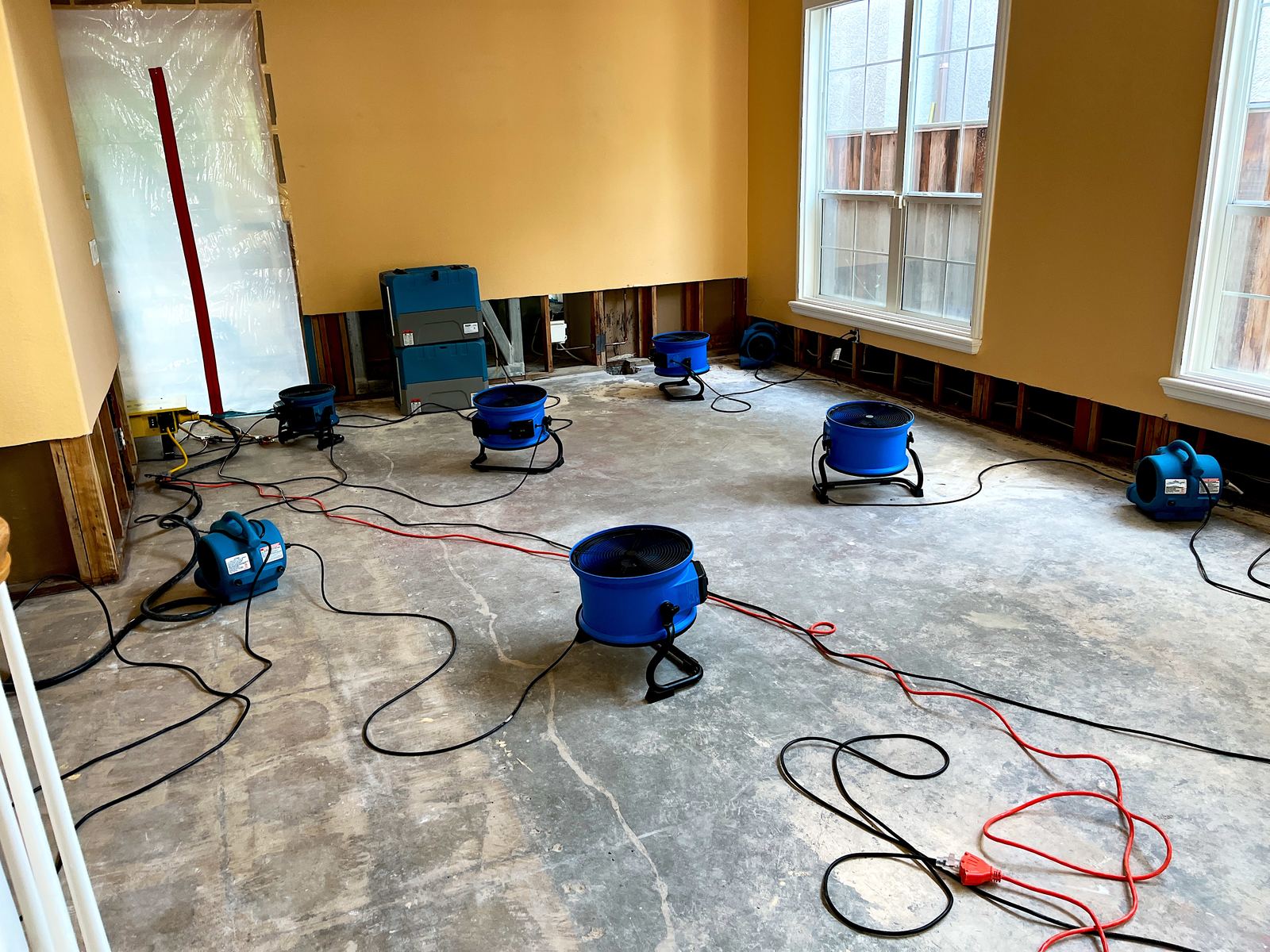


Hidden slab leak discovered after water appeared between floorboards
A water supply line burst inside the concrete slab of the house. Even though this was not sewage water, slab leaks can still create serious complications because the leak can stay hidden long enough to saturate a large area.
Concrete is a low-evaporation material, so once the slab is wet, drying can take significantly longer than it would with more open materials. In this San Jose home, the client first noticed water seeping between floorboards on the first floor, but there were no obvious signs showing where the leak was coming from.
The first suspected location turned out not to contain the water supply line. That area was more saturated because the flooring sloped in that direction and more water had accumulated there.
When SAFENEST began mitigation, our crew followed the actual moisture pattern and identified where the water was coming from. For slab leaks, this type of investigation can be destructive, but opening the affected materials often gives a much clearer path to the real source.
For this project, we removed flooring from the affected floor and exposed the concrete slab so drying could begin properly. We also made clean drywall cuts around the affected areas.
The cabinets were not damaged enough to justify removal, which kept the project less complicated than it could have been. The project file documents the exposed slab, affected flooring, drywall cuts, and mitigation work needed to stabilize the home.